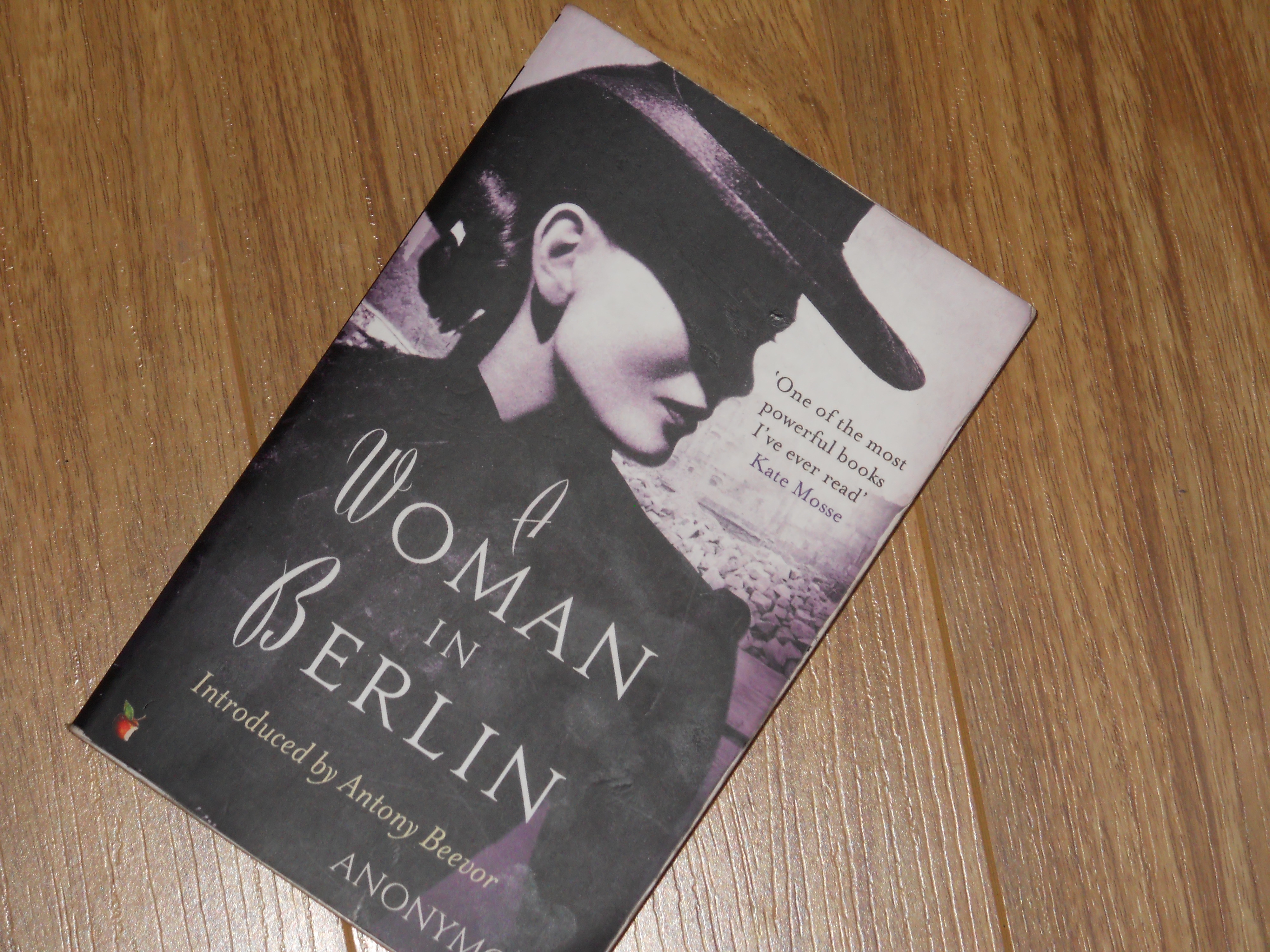
Book Review: A Woman in Berlin

A Woman in Berlin

On a recent trip to Berlin, I decided to mix my love of books with my desire to travel and set myself the following rule:

Every time I go on holiday, I will buy a book that is related to the town, city or country I am visiting.

So, with that in mind, ‘A Woman in Berlin’ was purchased from the gift shop at the Jewish Museum. The author of this book is unknown as it was her expressed wish to remain anonymous. Taking us through her diary entries between 20th April 1945 and 22nd June 1945, we learn of the experiences of German citizens, particularly women, and how they coped during this time.

I wasn’t really sure what to expect when I started reading as I’d  never really considered how the war, and the fall of Berlin to the Allies (particularly Russia), affected those living there. Reading this diary was an eye opener.

‘A Woman in Berlin’ received a lot of criticism from Germans when it was first published and I can understand why. It unashamedly details the numerous rapes of German women by Russian soldiers and the stoicism of they displayed. There are many occurrences where the author and other women openly discuss their encounters and many of them use this situation to their advantage; receiving much needed food and other necessities from their tormentors.

Through this book, we also learn of the relationships that are formed between residents and how old relationships changed. How people who once considered themselves to be ‘civilised’ were looting and fighting over supplies for their own survival. It’s a snapshot of the life of one woman and the people around her and reveals another side of the war.

Whilst I was reading this, I was conscious of the fact that some critics have questioned whether or not this was an authentic diary so I guess I was subconsciously looking for ‘clues’ that would prove it was/wasn’t. I have to say I’m very much on the “this is a real diary and not fiction” fence.

Now, you may read what I’m about to say and be like “well d’uuuuh” but what did it for me was an excerpt where the author details a conversation she had with a Russian soldier in French. She writes the conversation in French as they would have spoken and, whilst I read this, I felt myself getting slightly annoyed that there was no translation for the conversation… But why would there be? She’s simply writing in her diary, right.

What I really found interesting was my overall reaction to this book. I found myself wanting to take it out of my bag and continue reading when I was at home; in spite of it’s heavy content. For me, the author of these diaries was a strong and practical woman who got up and got on with life, even when she wasn’t sure how and I think it’s this that made me want to keep on reading to see how things ended for her. I didn’t feel I was being pulled into a depressing monologue.

I did think this was a good read and I appreciate the knowledge and insight it provides but I don’t think it’s one I would go shouting to my friends about as a must read (unless they were interested in the historical context). With that in mind, I’m going to give this one 6.5 out of 10 stars.

Happy reading xx

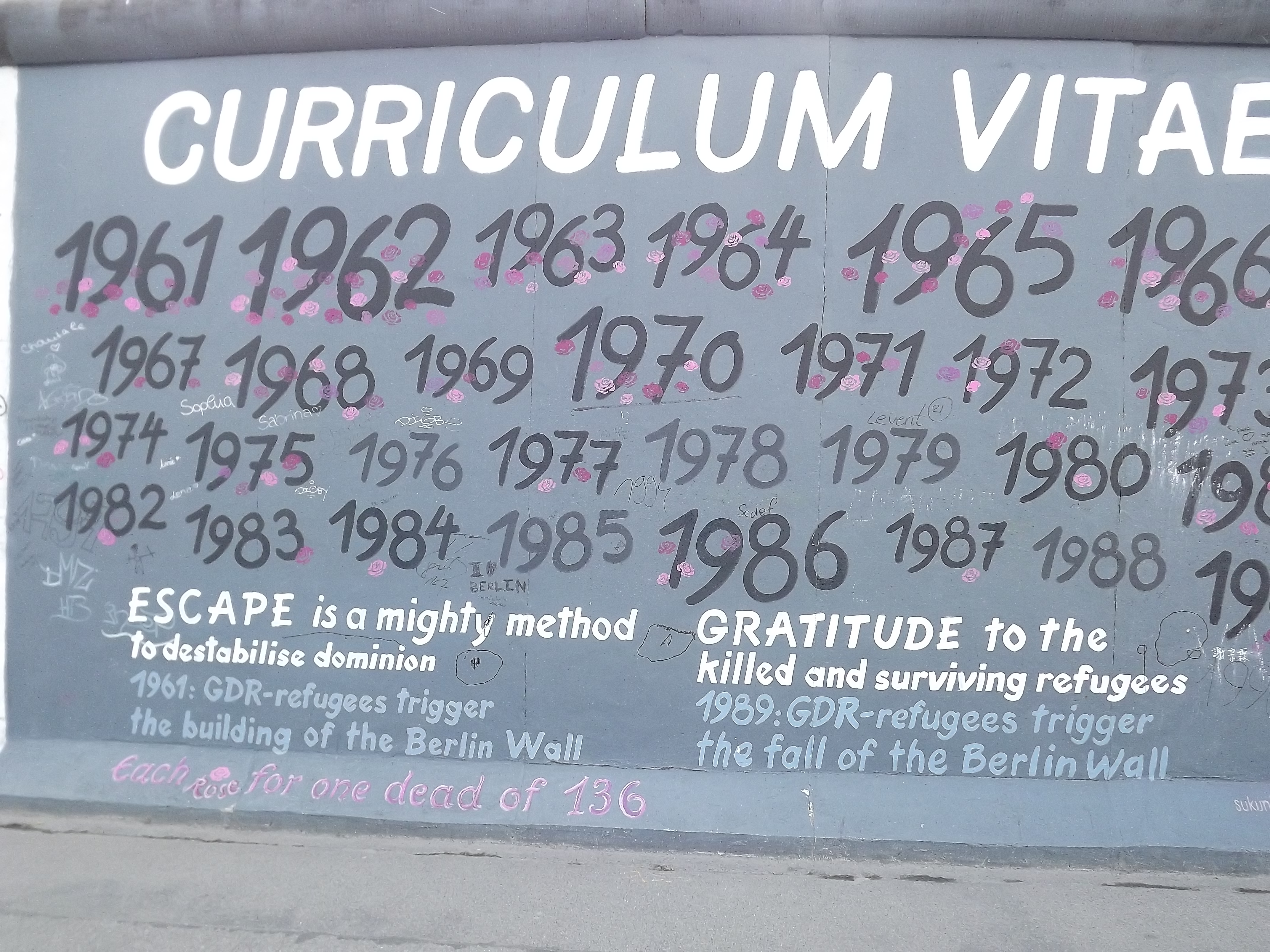
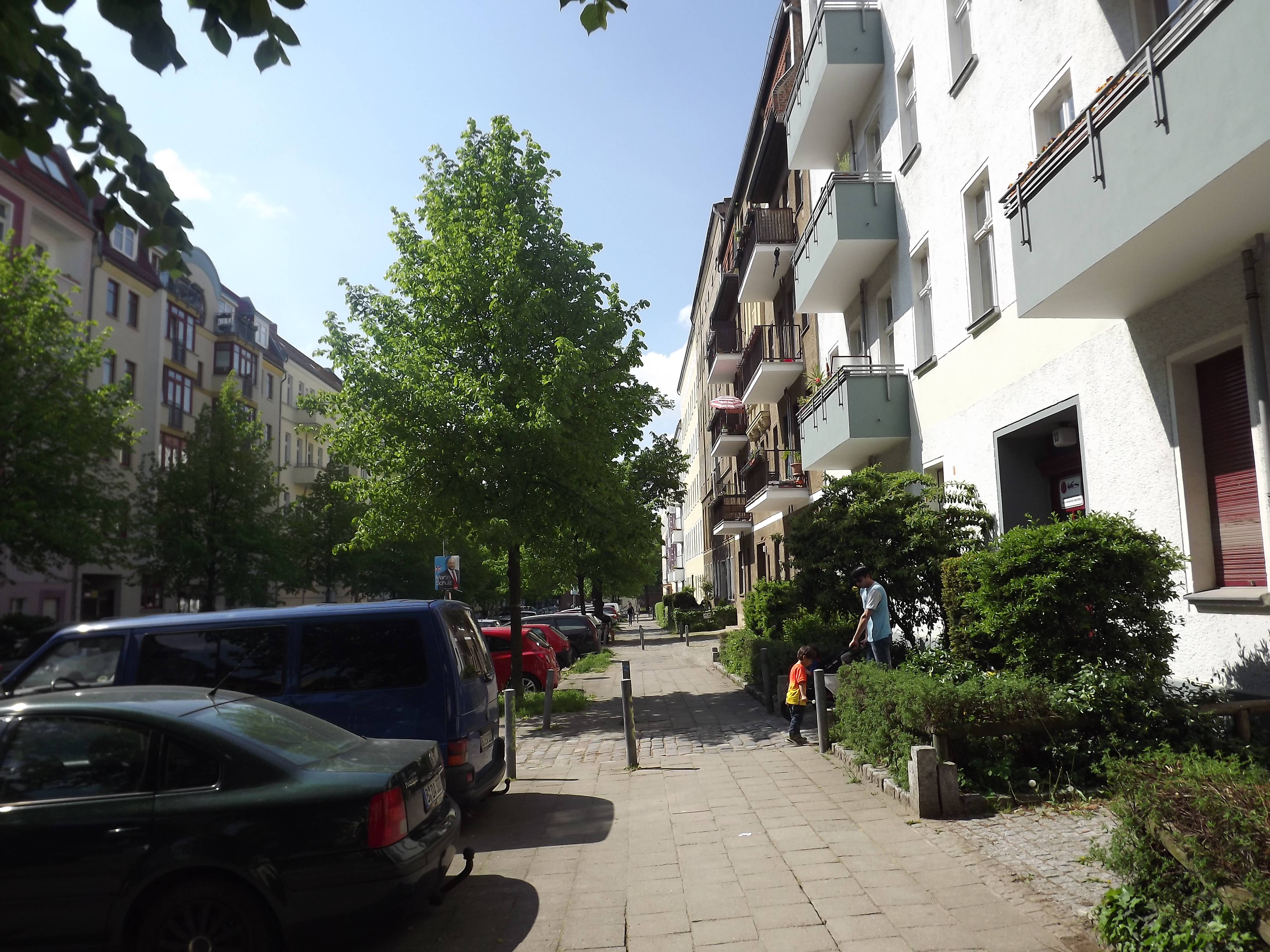
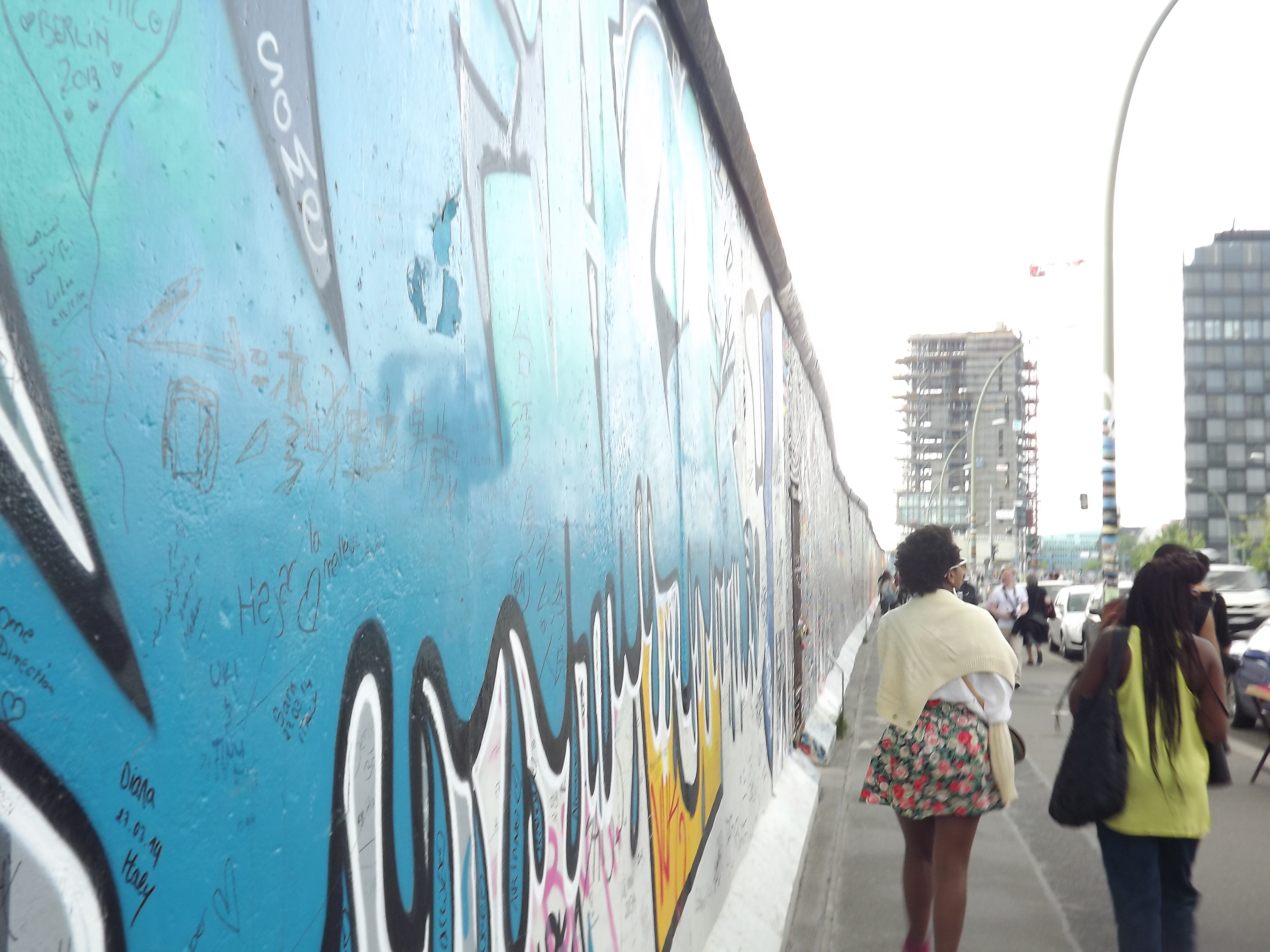
P.S. I’ve posted some pics below of my time in Berlin for you to enjoy 🙂

Berlin

Berlin wall

Berlin street

Berlin wall 2


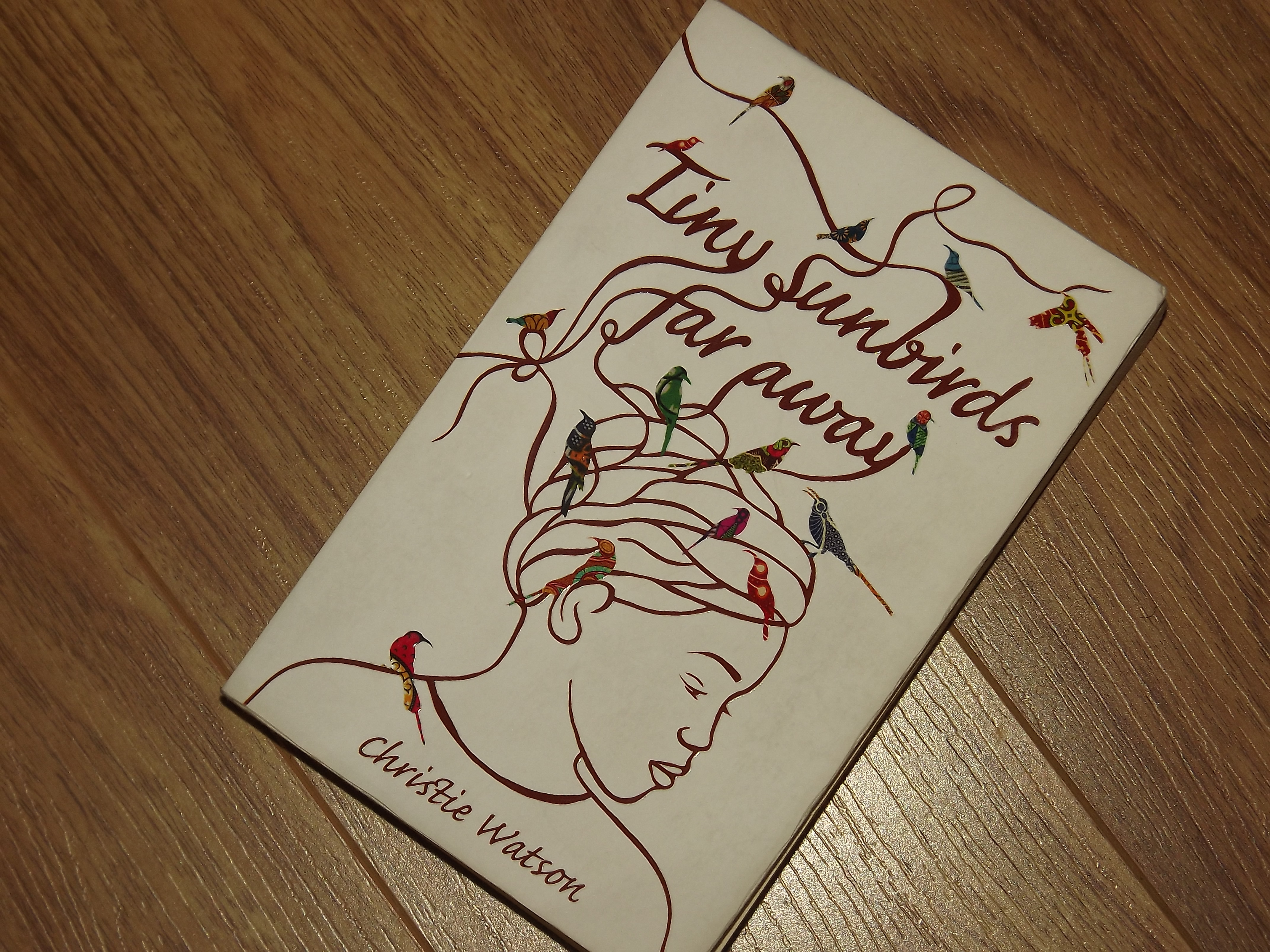
Tiny Sunbirds Far Away by Christie Watson

Tiny Sunbirds Far Away

I thoroughly enjoyed this book and have recommended it lots of people…and even made my mum take it on holiday to read during ‘quiet time’.

Tiny Sunbirds Far Away was the winner of the Costa First Novel Award 2011 and my was it deserved. Set in Nigeria, this is the tale of the young Blessing and her experiences after leaving not only her (cheating) father but also a life of luxury in bustling Lagos to live on her grandfather’s compound in the countryside with her mother and brother.

Written in the first person narrative, Watson’s use of language takes you into Blessings world. You get a real sense of living in the Nigerian countryside as Watson addresses themes of polygamy, religion, political unrest, domestic violence, alcoholism and fighting against adversity.

It’s a great read. There are laugh out loud moments, mostly thanks to the vibrant personality of Celestine (I won’t say anymore about her character 🙂 ), and also points which may bring you to tears. You could say it’s a bit of an emotional roller coaster…but an enjoyable one!

I can’t ignore the fact that I was pleasantly surprised (ok, shocked) when I realised that, not only was this Watson’s first book, she was a nurse and was not Nigerian…or even African. The way she has captured Nigerian culture; from practices and traditions to the spoken language and colloquialisms of the characters is amazing and I applaud her work.

Before I’d even finished this, I googled Watson to see if she’s written any other books and was happy to see she had- Where Women are Kings. I swiftly ordered and am happy to say have read it. I’ll complete a review on this in the coming weeks. But in the meantime guys, I urge you to get yourself a copy of Tiny Sunbirds Far Away!

Happy reading xx

A Town Like Alice

A Town Like Alice


There’s nothing I love more than going to a bookshop and just browsing until I find a book that catches my eye (especially when I’m feeling stressed). This is how I came across ‘A Town Like Alice’ by Nevil Shute.

Very briefly, ‘A Town Like Alice’ follows Jean Paget’s experiences in Malaya during the Japanese invasion of World War II. We see how she overcomes the brutal treatment of her captors and finally settles in the Australian outback after falling in love with Australian prisoner of war Joe Harman.

I’ve kept this summary as brief as possible because I’d love for you to read the book and get to grips with the story yourself. So much lies behind this overview and, for me, the book has a real sense of discovery which I don’t want to spoil.

After I’d turned the final page of ‘A Town Like Alice’, my first thought was: “I feel like I’ve just read two books”. Through the narrative of an English attorney, Shute not only presents us with an experience of war outside of fighting on the front line, he also provides detailed insight into life in the Australian outback; which, in a ‘normal’ situation (for me anyway) you wouldn’t associate with one another.

This is a story of survival, determination, strength and courage. What I love about it is the fact that it’s not just Jean’s story that displays this, Joe Harman’s experiences are just as inspiring. Shute’s writing style really made me feel like I was living the character’s experiences with them.

A great read, this book gets 8.5 out of 10 stars and strong recommendations from me!

Happy reading xx